
Importance of Task Prioritization
The demands of modern life can often feel overwhelming. To navigate through a whirlwind of responsibilities efficiently, mastering the art of task management becomes essential. The ability to prioritize tasks effectively can dramatically impact your productivity levels while also minimizing feelings of stress and burnout. Two widely embraced approaches to achieve this are the Eisenhower Method and the Prioritization Matrix, each offering unique advantages for different situations.
The Eisenhower Method: Urgency Meets Importance
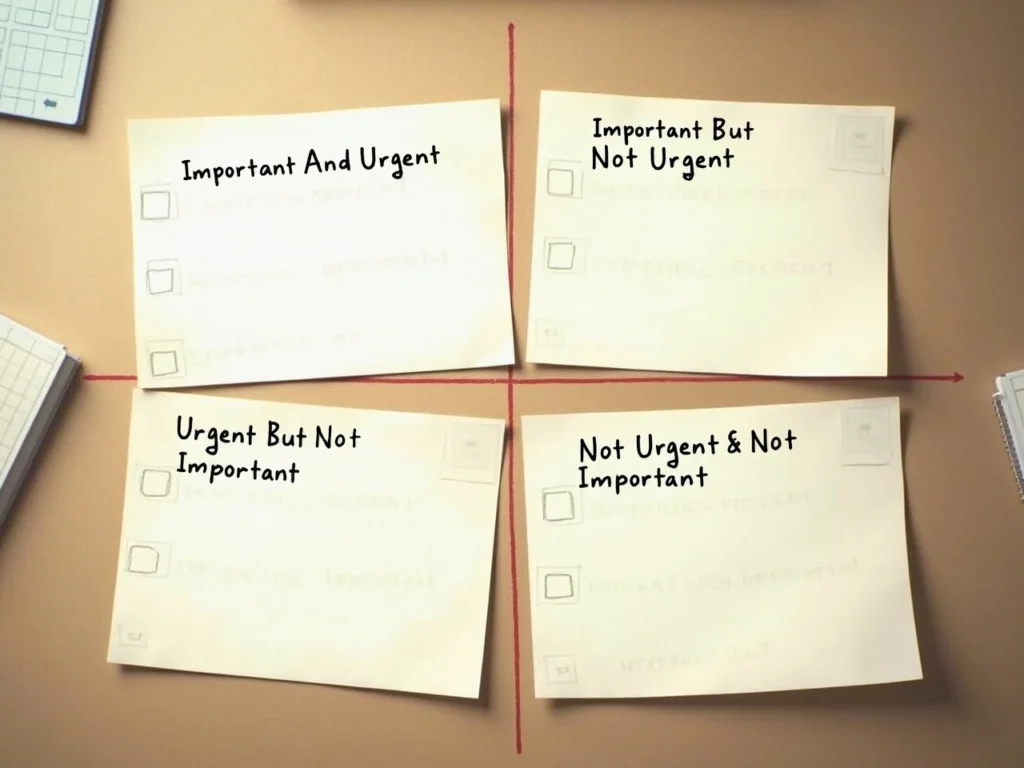
The Eisenhower Method, inspired by former U.S. President Dwight D. Eisenhower, is grounded in the principle that not all tasks are created equal. By categorizing tasks into four quadrants, this method distinguishes tasks as either urgent or important:
- Quadrant 1: Urgent and Important – Tasks that require immediate attention, such as a report due tomorrow.
- Quadrant 2: Important but Not Urgent – Long-term goals and planning, like personal development activities.
- Quadrant 3: Urgent but Not Important – Tasks that may feel pressing but do not significantly impact your overall goals, like peripheral emails.
- Quadrant 4: Not Urgent and Not Important – Activities that can be eliminated or scheduled for later, such as binge-watching a series.
This method allows users to visualize where their time is being allocated and helps to focus on what truly drives results.
The Prioritization Matrix: A Visual Approach
On the other hand, the Prioritization Matrix is a versatile tool that enables individuals to assess multiple criteria when ranking tasks. Unlike the linearity of the Eisenhower Method, this grid allows users to weigh tasks according to various factors such as time required, impact level, and resource availability. For example, a task with high impact and low time requirement should be prioritized over a task that takes significant time but has little effect.
The visual nature of the matrix can provide clear insights, facilitating better decision-making at a glance. It’s especially useful in team settings where collaborative projects require collective effort in prioritization.
Key Considerations for Task Prioritization
As you explore these task prioritization methods, consider several pivotal aspects:
- Purpose: Clearly define what you aim to accomplish. Are you focusing on immediate deadlines or long-term growth?
- Time Sensitivity: Identify which tasks breathe urgency and which ones are foundational, allowing you to balance your schedule appropriately.
- Visual Aids: Determine how employing visual tools, like matrices, can help streamline your task evaluation process.
By delving further into the strengths and applications of the Eisenhower Method and the Prioritization Matrix, you’ll uncover a variety of techniques that not only heighten efficiency but pave the way for smarter decision-making in both personal and professional realms. This exploration equips you with practical strategies for consistent productivity, ultimately transforming the way you approach your daily tasks.
DISCOVER MORE: Click here for essential tools
Understanding the Eisenhower Method
The Eisenhower Method provides a pragmatic framework for prioritizing tasks, particularly suited for managing time in both personal and professional environments. This method effectively helps individuals discern between what is urgent and what is important, allowing them to allocate their efforts where they matter most. The primary goal here is to help individuals focus on high-impact tasks that contribute to their long-term goals and well-being, rather than getting caught up in the less significant, day-to-day grind.
Consider the example of a project manager faced with a tight deadline to deliver a significant proposal. They might identify this task as falling into Quadrant 1 of the Eisenhower Matrix. However, they also have long-term strategic planning sessions that are vital for future success, categorized in Quadrant 2. By leveraging the Eisenhower Method, this project manager can consciously prioritize their time, tackling the proposal while also reserving moments for future planning—a delicate balance that can significantly enhance productivity.
The Versatility of the Prioritization Matrix
Conversely, the Prioritization Matrix offers a more intricate approach, allowing individuals to assess tasks based on multiple dimensions beyond just urgency and importance. This tool can categorize tasks by factors such as resource availability and potential impact, making it incredibly useful in environments where decisions need to be made in a collaborative context, such as in teams or organizations. For instance, when launching a new marketing campaign, team members may need to evaluate which tasks should take precedence based on criteria like cost, return on investment (ROI), and time constraints.
- Impact: How significantly will completing this task affect overall goals?
- Time Requirement: What is the duration needed to complete this task?
- Resource Availability: Are the necessary tools or personnel available to engage in this task effectively?
By visualizing tasks in a grid format, the Prioritization Matrix enables individuals and groups to quickly gain clarity on their priorities, thus streamlining decision-making processes. This visual aid is especially handy when determining which initiatives to pursue first or when teams must negotiate their relative priorities based on shared objectives.
Harmonizing Methods for Maximum Effectiveness
As different scenarios call for varying approaches, understanding the strengths of both the Eisenhower Method and the Prioritization Matrix can enhance your overall productivity strategy. By recognizing where each method excels, individuals can harmonize these techniques to form a comprehensive prioritization strategy, ensuring alignment with both urgent deadlines and broader personal or organizational objectives. Whether you are managing daily tasks or navigating complex project timelines, understanding these methods equips you to approach your workload with confidence and precision.
Effective Task Prioritization Methods: Comparing the Eisenhower Method and the Prioritization Matrix
As we delve deeper into the intricacies of effective task prioritization methods, it’s essential to extend our understanding beyond just the theoretical framework. This section presents a comprehensive comparison of two prominent techniques: the Eisenhower Method and the Prioritization Matrix. By doing so, we can appreciate how each approach caters to distinct needs and scenarios, ultimately enhancing productivity.
The Eisenhower Method focuses on distinguishing between urgency and importance, enabling individuals to categorize their tasks into four quadrants. This approach not only fosters a sense of accountability but also emphasizes what truly warrants attention. By prioritizing tasks effectively, users can reduce stress and enhance their overall productivity, allowing them to focus on core responsibilities without the burden of constantly interrupted workflow.
On the other hand, the Prioritization Matrix offers a more structured visual representation of tasks, often encouraging a collaborative approach among team members. Through this method, tasks are evaluated based on criteria such as potential impact and effort required. This holistic view aids in decision-making, particularly in environments where teamwork is crucial. Furthermore, it provides a clear understanding of which tasks can deliver the highest return on investment in terms of time and resources, streamlining efforts toward the most impactful objectives.
As you engage with these methodologies, consider how their unique attributes can serve different aspects of project management and personal productivity. To provide more context, we present a detailed comparison table highlighting the advantages of each method.
| Category | Advantages |
|---|---|
| Eisenhower Method | Promotes decisive action by clearly identifying urgent vs. important tasks |
| Prioritization Matrix | Visual clarity aids in collaborative decision-making and efficiency |
Engaging with both the Eisenhower Method and the Prioritization Matrix can significantly improve not only your task management but also enhance how teams interact and work together. Each method has unique features that can be leveraged for various scenarios, allowing individuals and teams alike to achieve their goals with greater efficacy.
DISCOVER MORE: Click here to enhance your planning skills
Finding the Right Fit: When to Use Each Method
Understanding when to apply the Eisenhower Method versus the Prioritization Matrix can be game-changing for enhancing productivity. Each method offers a unique lens through which to view tasks, and knowing which guideline to follow can aid in honing your focus, particularly in high-pressure scenarios.
The Eisenhower Method shines in situations where time is of the essence. For individuals faced with constant interruptions or last-minute requests, this method provides an immediate framework to assess and act swiftly. Picture a busy healthcare professional managing urgent patient cases; the Eisenhower Method helps them prioritize immediate care while also allocating time for critical administrative planning—essential for long-term efficiency. This method’s straightforward structure facilitates rapid decision-making, enhancing execution potential when external pressures mount.
On the other hand, the Prioritization Matrix stands out when dealing with complex projects or multi-faceted tasks that require collaboration and consensus. In a corporate setting, for instance, a team tasked with launching a new product might benefit from the collaborative nature of the Prioritization Matrix. By allowing team members to evaluate each task based on various factors—such as potential impact and resource allocation—the matrix promotes integrated decision-making. It ultimately supports teams in aligning their efforts towards shared goals while also fostering a deeper understanding of each member’s contributions and their relative importance.
Case Studies and Real-World Applications
Real-world applications can provide insights into the effectiveness of both prioritization methods. For instance, a renowned tech company, Apple, is known for its meticulous task prioritization. The teams often leverage a hybrid approach, utilizing the Eisenhower Method to tackle immediate bugs and urgent feedback, while simultaneously employing a Prioritization Matrix to shape long-term strategic projects, such as product launches or system overhauls. This balance enables them to sustain quality while innovating continuously.
Another notable example comes from nonprofit organizations, where the demand for resources often exceeds availability. They can utilize the Prioritization Matrix to assess which programs yield the most value relative to cost and immediate impact. Simultaneously, they can employ the Eisenhower Method for urgent matters such as grant deadlines or community outreach events that can’t be deferred. By employing both methods, nonprofits can ensure they remain mission-focused while also being responsive to changing circumstances.
Challenges and Considerations
While both methods offer significant advantages, they also come with particular challenges. The simplicity of the Eisenhower Method may lead some users to overlook subtler nuances of task impact, potentially resulting in missed opportunities for innovation or improvement. Conversely, the complexity of the Prioritization Matrix may overwhelm individuals fraught with deadlines, as they may find it challenging to reach consensus within a diverse team.
To combat such challenges, it’s essential for users to approach task prioritization with a mindset of adaptability and continuous improvement. This means regularly revisiting both methods to refine and adjust parameters as circumstances evolve. For instance, adopting digital tools, such as project management software that integrates both prioritization frameworks, can streamline the process and may even provide analytics to inform future decisions.
Ultimately, the journey of effective task prioritization is not just about choosing one method over the other. It’s about understanding the unique context of your workload and being agile enough to draw on each approach as needed. The interplay of urgency and importance in work, whether in corporate or personal realms, demands that we remain flexible in our strategies, ensuring that we maximize both productivity and positive outcomes.
DIVE DEEPER: Click here to learn how to master your priorities
Conclusion: Mastering Task Prioritization for Optimal Productivity
In the realm of productivity, effective task prioritization methods such as the Eisenhower Method and the Prioritization Matrix stand as powerful tools in the arsenal of professionals striving for efficiency. Each method serves distinct purposes, catering to varying scenarios and needs of individuals or teams. The Eisenhower Method excels in fast-paced environments requiring quick decision-making, while the Prioritization Matrix facilitates collaborative efforts in complex projects, ensuring that every voice is heard and every task is evaluated based on comprehensive criteria.
Real-world applications, from tech giants like Apple to the diligent operations of nonprofit organizations, illustrate how these methods can be harmoniously integrated to adapt to the dynamic nature of modern tasks. By combining the rapid responsiveness of the Eisenhower Method with the analytical depth of the Prioritization Matrix, one can achieve a balanced approach that embraces both urgency and strategic planning.
However, challenges exist in implementing these frameworks, with the simplicity of one potentially overlooking nuances and the complexity of the other causing analysis paralysis. Yet, approaching task prioritization with flexibility and a readiness to evolve can turn these challenges into opportunities for enhanced performance. Regularly revisiting and refining these methods can lead to continuous improvement and better alignment with personal and organizational goals.
As we continue to navigate a world filled with competing demands, understanding and wielding these task prioritization methods effectively not only fosters productivity but also elevates the quality of outcomes in both professional and personal contexts. With the right approach, anyone can master the art of prioritization, ensuring that they tackle the most impactful tasks first and drive success forward.
Related posts:
How Task Prioritization Can Enhance Your Well-Being and Reduce Stress
Mindfulness and Prioritization: How Mindfulness Can Help in Time Management and Decision Making
How to Create a Task Prioritization System That Works for You
The Psychology of Prioritization: How Your Habits Affect Decision Making
The Art of Prioritization: How to Decide What to Do First in a World Full of Distractions
Task Prioritization in Remote Teams: Strategies for Efficient Collaboration

Linda Carter is a writer and productivity and personal organization specialist focused on helping readers build better routines, manage their time, and stay on top of daily priorities. With experience covering practical planning methods, habit-building strategies, and tools for organization, Linda shares actionable guidance on our platform. Her goal is to empower readers with clear, realistic tips to work smarter, reduce overwhelm, and stay consistent over time.