The Art of Creating Puzzles: How Creative Challenges Can Stimulate Innovation and Critical Thinking

The Importance of Creative Challenges in Modern Society
As society evolves in response to technological advancements and shifting cultural landscapes, the role of creative challenges has become increasingly significant. These challenges serve not only as a means of entertainment but also as powerful tools for enhancing innovation and critical thinking. Engaging in thoughtfully designed puzzles can unleash our cognitive potential and stimulate deep analytical skills, encouraging individuals to approach problems from diverse angles.
The Many Forms of Puzzles
Puzzles manifest in various formats, each offering specific advantages that contribute to mental development. Some prevalent types include:
- Logic puzzles: These require the solver to analyze information systematically, enhancing reasoning skills and decision-making. For example, Sudoku not only provides entertainment but also strengthens logical deduction abilities, making it a popular choice among puzzle enthusiasts.
- Physical challenges: Activities such as escape rooms or obstacle courses improve spatial awareness and fine motor skills. Participants must navigate complex environments, which enhances their problem-solving abilities under pressure.
- Word puzzles: Crosswords and word searches can significantly boost vocabulary and linguistic dexterity. Regular engagement with these puzzles can improve language skills, which is particularly beneficial for students and professionals who rely on effective communication.
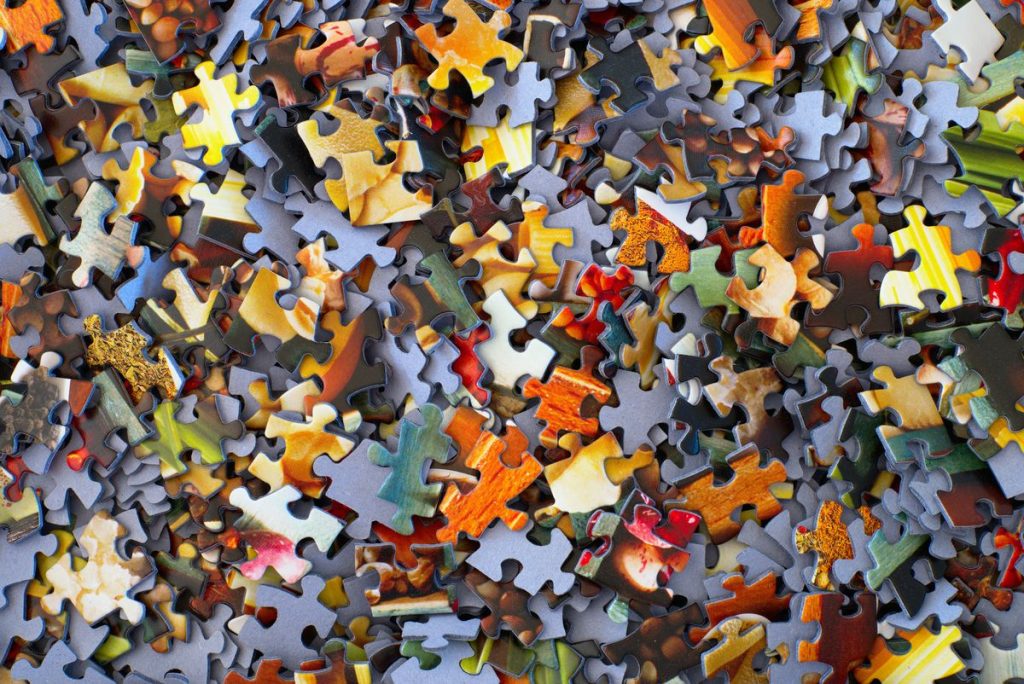
- Visual challenges: Tasks that focus on observation, such as finding hidden objects or completing jigsaw puzzles, sharpen attention to detail. This increased awareness can translate to better performance in various fields, including art, design, and any discipline requiring careful analysis.
Integrating Puzzles into Daily Life
Incorporating puzzles into everyday routines can yield substantial cognitive benefits. Beyond individual growth, puzzles can foster collaboration, ignite debates, and catalyze innovative ideas. Engaging in group puzzle-solving activities encourages sharing diverse perspectives, which can lead to groundbreaking solutions that may not emerge in isolation.
Moreover, workplaces that promote puzzle challenges often see increased employee morale and productivity. Team-building exercises centered around puzzles can enhance camaraderie and improve communication skills among coworkers. For example, companies like Google have incorporated such creative activities into their team-building strategies, yielding remarkable results in team dynamics and innovative output.
The Growing Need for Critical Thinking
As the demand for critical thinking skills continues to rise across numerous sectors—from education to technology—the significance of engaging with creative challenges becomes evident. This intersection of entertainment and learning creates a conducive environment for growth, encouraging both individuals and organizations to delve deeper into the fascinating realm of puzzles.
Promoting the art of puzzle creation and participation not only empowers individuals but also cultivates a culture of innovation. By embracing these creative challenges, society can better prepare for the complexities of the modern world, ultimately leading to a brighter, more inventive future.
DIVE DEEPER: Click here to discover the impact of video games on mental agility
The Psychological Benefits of Engaging with Puzzles
When it comes to the interplay between puzzles and the mind, the psychological benefits are undeniable. Engaging with creative challenges stimulates a spectrum of cognitive processes that enhance overall mental acuity. Puzzle enthusiasts often report feelings of satisfaction and accomplishment, providing an emotional reward that reinforces engagement. This feeling is partly due to the brain’s production of dopamine, which occurs when we successfully solve a problem, fostering a desire to take on even more challenges.
Research has shown that solving puzzles can lead to improvements in various cognitive functions. For instance, a study published in the journal Frontiers in Psychology highlighted that participants who engaged in regular puzzle activities displayed better problem-solving skills and a higher degree of cognitive flexibility. Such flexibility is crucial in today’s fast-paced world, where the ability to adapt one’s thought processes to new information or challenges has never been more essential.
Building a Growth Mindset through Puzzles
Engaging in puzzle-solving nurtures a growth mindset, a concept popularized by psychologist Carol Dweck. By tackling challenges and persisting through difficulty, individuals learn that their abilities can improve with effort and practice. This mindset is particularly vital in educational settings, where students are often confronted with complex problems that require innovative solutions. Puzzles encourage learners to approach challenges with curiosity, resilience, and creativity, all of which are key components of effective critical thinking.
Moreover, puzzles can serve as a constructive form of stress relief. When faced with the pressures of daily life, engaging in a challenging puzzle allows individuals to focus their mental energy on something productive. This redirection not only provides a mental break but also fosters a sense of accomplishment once the puzzle is completed. Such experiences can promote overall mental well-being, ultimately contributing to greater productivity and creativity in other areas of life.
The Role of Collaboration in Puzzle-Solving
Beyond the individual benefits, puzzles can act as a catalyst for collaboration and teamwork. Many puzzles, such as escape room challenges or team-based riddles, require multiple people to work together to arrive at a solution. This collaboration enhances not only critical thinking but also interpersonal skills such as communication and trust-building. According to a study by the American Psychological Association, group problem-solving activities can lead to greater idea generation compared to solitary efforts. By sharing diverse viewpoints, teams can arrive at more innovative solutions on complex issues, which is particularly valuable in today’s increasingly interconnected world.
In summary, immersing oneself in the art of puzzle creation and engagement yields considerable benefits for mental development, emotional health, and teamwork. As society continues to grapple with multifaceted challenges, fostering a culture that embraces puzzles could provide a vital framework for the growth of innovation and critical thinking skills.
The Art of Creating Puzzles: A Pathway to Innovation
Creating puzzles isn’t merely an exercise in leisure; it is a sophisticated art form that engages the mind in a myriad of ways, leading to heightened innovation and critical thinking skills. As individuals tackle various creative challenges, they learn to navigate complex problems, developing solutions that are both inventive and effective. This enables them to think outside the box, a necessity in today’s rapidly evolving landscape.
Puzzles come in numerous formats, whether they are logic problems, riddles, or construction challenges. Each type serves as a robust platform for enhancing cognitive abilities. For example, while working on jigsaw puzzles, one enhances visual-spatial skills and memory retention, facilitating a greater grasp of how parts fit into a whole. Moreover, engaging with riddles or strategic games promotes analytical reasoning, allowing individuals to dissect scenarios and draw connections that may not be immediately apparent.
Furthermore, problem-solving through puzzles is not just solitary in nature; collaborative efforts can lead to shared insights and creative breakthroughs. This team-oriented approach fosters an environment of open communication, where diverse perspectives contribute to a richer problem-solving process. Companies that incorporate puzzle challenges within their teams report enhanced morale and productivity, demonstrating how engaging with puzzles doesn’t just benefit individuals but also organizations.
As we delve deeper into the world of puzzle creation, it becomes evident that these challenges serve as a crucial foundation for educating our minds and equipping us for future challenges. Aligning recreational activities with cognitive development is essential for individuals and teams seeking to harness their full potential.
| Category | Key Features |
|---|---|
| Cognitive Skill Development | Enhances critical thinking and innovation through engaging challenges. |
| Team Collaboration | Fosters teamwork and collective problem-solving for diverse perspectives. |
Ultimately, by embedding puzzles within both educational settings and professional environments, we can cultivate a culture of innovation and analytical prowess. This culture not only bolsters individual growth but also amplifies organizational success in an increasingly complex world.
DIVE DEEPER: Click here to discover how mind games can enhance learning
The Role of Technology in Puzzle Creation and Engagement
In recent years, technology has revolutionized the way we interact with puzzles, further enhancing their potential to inspire innovation and critical thinking. With the advent of digital platforms, online puzzles and applications have made puzzle-solving more accessible than ever. For instance, mobile apps designed for brain training, such as Lumosity or Elevate, utilize game-like interfaces to present puzzles that challenge users’ cognitive abilities. These platforms often incorporate algorithms that adapt to individual skill levels, thereby providing personalized challenges that keep users engaged and constantly learning.
Moreover, the integration of augmented reality (AR) and virtual reality (VR) into puzzle experiences has created immersive environments that deepen engagement. Escape room experiences have emerged as a popular form of entertainment in many cities across the United States, marrying puzzle-solving with real-world interaction. The complexity of these puzzles often demands not only critical thinking but also creativity and spatial awareness, skills that are crucial in many professional settings.
Puzzles as Educational Tools
Puzzles are increasingly being recognized as effective educational tools, serving to enhance learning across various disciplines. Educational institutions incorporate puzzles into their curriculum to stimulate engagement and promote a deeper understanding of complex concepts. For example, mathematics classes might use logic puzzles to teach problem-solving techniques, while history educators may utilize mystery puzzles to encourage students to analyze historical events critically.
Furthermore, puzzles can also foster interdisciplinary connections. By creating puzzles that relate topics across various subjects—such as math, literature, and science—educators can promote a holistic approach to learning. For instance, a puzzle that combines math problems with literary themes can engage students’ interests in both areas, leading to a richer educational experience. A study conducted by Harvard University found that students who engage in such interdisciplinary puzzle-solving approach display enhanced critical thinking skills and improved academic performance compared to their peers who experience traditional instructional methods.
The Business World and Puzzle-Based Innovation
The influence of puzzles extends into the business realm, where organizations are increasingly leveraging puzzle-based challenges to drive innovation. Companies like Google and IDEO use puzzles in their team-building activities to promote creative problem-solving and innovative thinking among employees. By presenting real-world business challenges in the form of puzzles, teams are encouraged to think outside the box and collaboratively develop inventive solutions.
This trend ties into the broader concept of design thinking, an innovative approach that emphasizes empathy and experimentation. Through puzzle-oriented workshops, teams can navigate complex problems by breaking them down into manageable parts, ultimately fostering an environment ripe for creative solutions. Research shows that companies implementing such methodologies not only enhance their team dynamics but also improve their overall productivity, emphasizing the importance of puzzles in modern business practices.
Ultimately, as puzzles continue to evolve with technology and become integral in educational and professional settings, their role in fostering innovation, creativity, and critical thinking is increasingly significant. By engaging with these creative challenges, individuals and teams alike can cultivate a mindset geared towards exploration and problem-solving that extends far beyond the world of puzzles.
DISCOVER MORE: Click here for insights on social interaction and memory improvement
Conclusion: Embracing the Puzzle Paradigm
In an era where the demand for innovation and critical thinking skills is paramount, the art of creating puzzles emerges as a vital tool for educators and business leaders alike. By integrating puzzles into various settings—whether in classrooms, team-building workshops, or tech-based platforms—individuals can cultivate an environment conducive to exploration, creativity, and collaborative problem-solving. The profound impact that puzzles can have on enhancing cognitive abilities cannot be overstated; studies reveal that engaging with these challenges leads to improved academic performance and higher productivity in professional contexts.
Furthermore, as technology continues to drive the evolution of puzzles, the potential for immersive and personalized experiences is boundless. The rise of augmented and virtual reality in puzzle design not only creates engaging scenarios but also encourages players to employ a broad range of skills, from logic and reasoning to spatial awareness and empathy. As educational institutions and businesses harness these new tools, they pave the way towards a more dynamic approach to learning and collaboration.
Ultimately, the art of puzzle creation represents a convergence of play and purpose, inviting us to embrace a mindset that values curiosity and adaptability. As we navigate an increasingly complex world, the ability to think critically and innovatively is essential. Engaging with puzzles offers a unique opportunity to challenge ourselves, redefine our problem-solving strategies, and discover new pathways to success. By delving into the world of puzzles, we not only entertain ourselves but also equip ourselves with the invaluable skills needed to thrive in the future.
Related posts:
Design Challenges: Using Puzzles to Stimulate Creativity in Artistic Projects
Challenges of Logic and Creativity: The Intersection of Puzzles and Personal Innovation
Visual Challenges: Exploring the Role of Perception and Imagination in Creative Puzzles
The Impact of Creative Board Games on Improving Collaboration and Communication Skills
The Influence of Creative Challenges in Education: How Mind Games Can Transform Learning
Gamification and Creativity: How to Turn Challenges into Innovation Opportunities

Linda Carter is a writer and puzzle expert specializing in mind games, brain teasers, and cognitive challenges. With extensive experience helping individuals enhance their problem-solving skills and think critically, Linda shares her knowledge on our platform. Her goal is to empower readers with practical advice, engaging puzzles, and strategies to sharpen their minds and achieve success in the captivating world of mind games and puzzles.